

Protect the Night Sky

Your Help Matters

Light pollution is one of the fastestgrowing environmental threats, and its impacts reach far beyond the glow on the horizon. It disrupts wildlife behavior, alters migration patterns, affects reproduction, and fragments habitat in ways we’re only beginning to understand. It also has a negative impact on human health.

Protecting the night sky is about restoring a natural rhythm that both wildlife and people depend on.

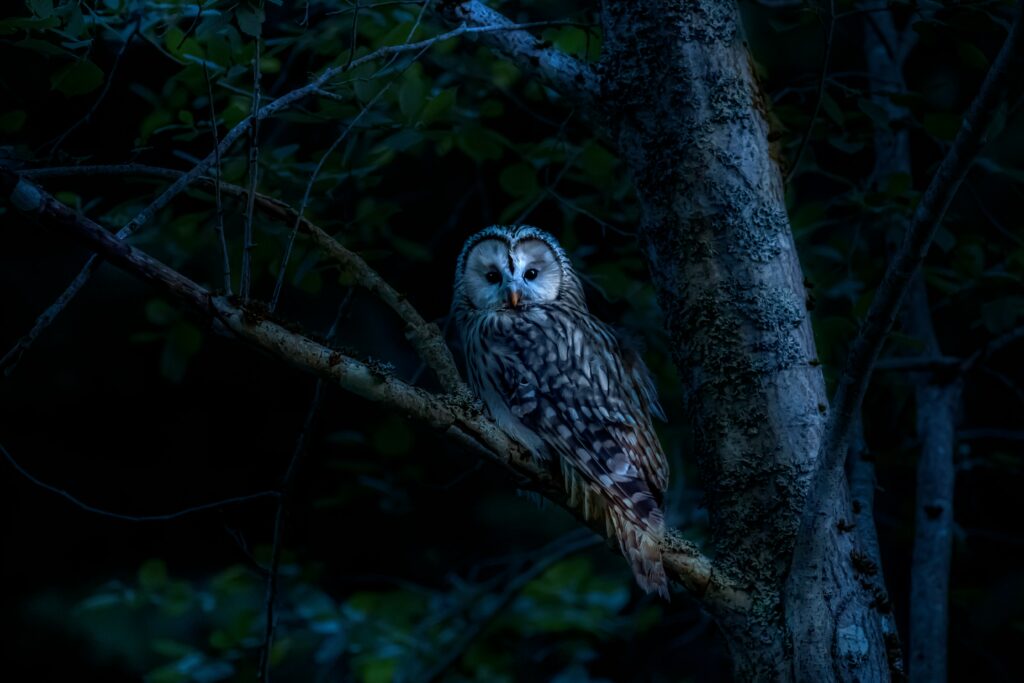
barred owl

How Light Pollution Affects Wildlife

Artificial light at night can dramatically change how animals move, feed, and communicate. Even small amounts of stray light can have big consequences.

  • Birds become disoriented, especially during migration, leading to collisions and energy loss.
  • Insects are drawn to lights, exhausting themselves and reducing food availability for birds, bats, and amphibians.
  • Frogs and toads stop calling, disrupting breeding cycles.
  • Bats avoid brightly lit areas, losing access to feeding grounds.
  • Plants and pollinators fall out of sync, affecting entire ecosystems.

When we brighten the night, we unintentionally reshape the natural world around us.

What To Do

Light pollution is one of the easiest environmental problems to solve—homeowners and business owners play a powerful role. Small changes can restore darkness, support wildlife, and improve your own wellbeing- and your view of the stars.

Homeowner Night-Sky Protection Checklist

✔ Use only the light you need
  • Turn off outdoor lights when they’re not in use
  • Avoid leaving porch, garage, and landscape lights on all night
✔ Choose wildlife-friendly bulbs
  • Select warm-colored LEDs (3000K or lower)
  • Avoid bright white or blue-toned lights that disrupt wildlife behavior
✔ Shield and direct your lighting
  • Use fully shielded fixtures that point light downward
  • Prevent light from spilling into trees, fields, or neighboring yards
✔ Keep lights low and dim
  • Use the lowest brightness needed for safety
  • Place fixtures closer to the ground rather than high on walls or poles
✔ Add motion sensors or timers
  • Lights should come on only when needed
  • Timers help reduce unnecessary overnight lighting
✔ Protect indoor darkness too
  • Close curtains or blinds at night to reduce light escaping outdoors
  • Choose softer indoor bulbs for rooms facing natural areas
✔ Rethink decorative lighting
  • Limit string lights, uplighting, and landscape spotlights
  • Use them sparingly and turn them off before bedtime
✔ Support dark-sky friendly communities
  • Talk with neighbors about collectively reducing light pollution
  • Encourage local adoption of dark-sky lighting practices